< img height="1" width="1" style="display:none" src="https://www.facebook.com/tr?id=715240178203482&ev=PageView&noscript=1" /> Factory Price Excavator bottom roller,Excavator bottom roller Suppliers,Excavator bottom roller OEM
内页banner

Excavator bottom roller

Home

Excavator bottom roller

  • Core Hardness Inspection of an Excavator Track Roller: Why Does It Matter?
    Core Hardness Inspection of an Excavator Track Roller: Why Does It Matter? Sep 02, 2026
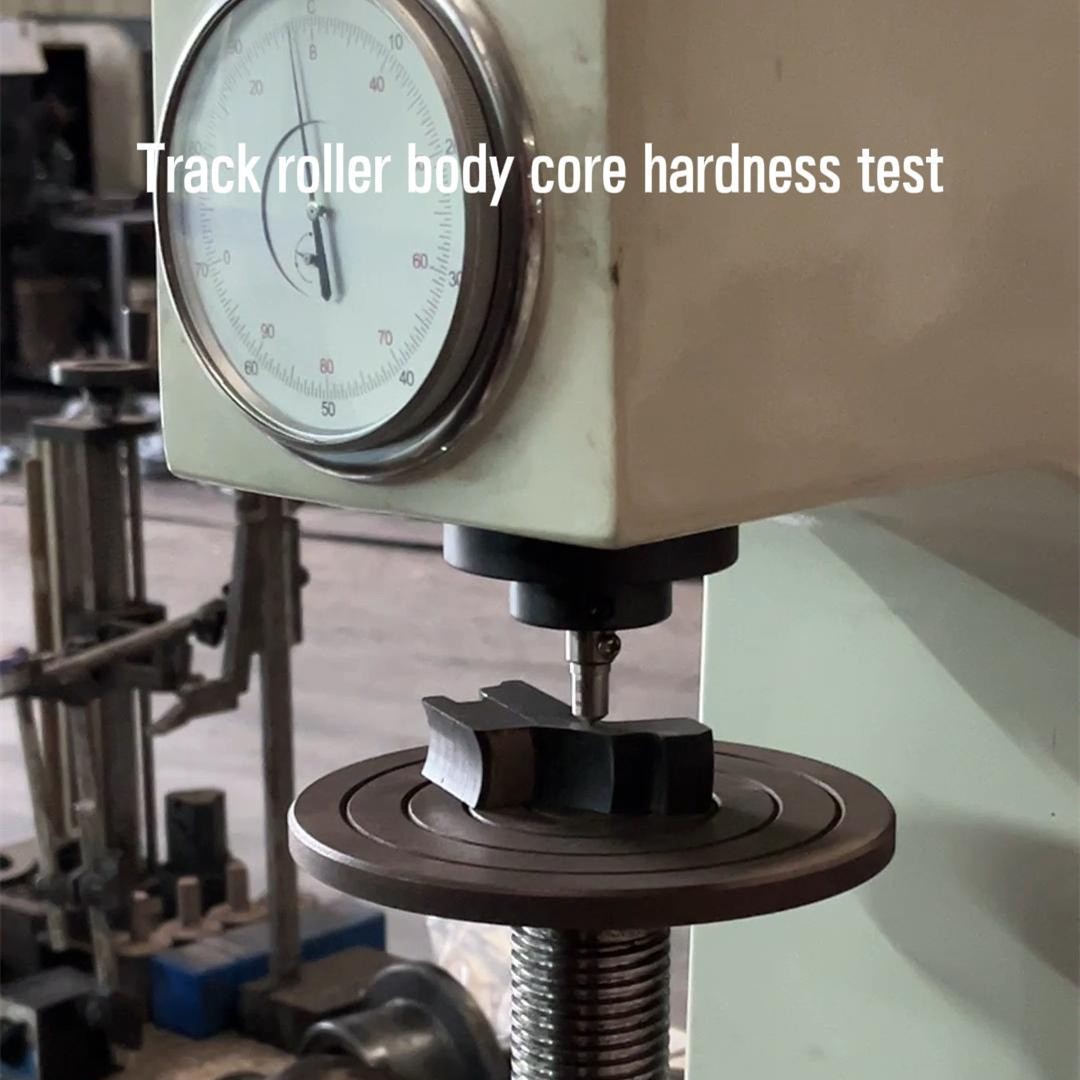
    Core hardness inspection is an important part of heat treatment quality control for an excavator track roller. It is closely related to the roller's impact resistance, internal toughness, structural strength, and overall service life. For excavators operating in demanding environments such as mines, construction sites, and heavy-duty earthmoving applications, a track roller needs more than good surface wear resistance. It must also have sufficient internal toughness to withstand continuous loads and impact during machine operation. If the core hardness is too high, the material may become excessively brittle. Under heavy impact loads, this can increase the risk of cracks or even component failure. On the other hand, if the core hardness is too low, the roller may not have sufficient overall strength, which can lead to deformation or reduced load-carrying capacity over time. Therefore, for a high-quality excavator track roller, achieving a proper balance between surface hardness and core hardness is an important part of heat treatment control. How Is Core Hardness Tested on a Track Roller? It is important to understand that simply measuring the hardness on the surface of a finished track roller does not constitute a core hardness inspection. An excavator track roller typically undergoes surface hardening treatment to improve its wear resistance. As a result, hardness measured directly on the outer surface mainly represents the surface hardness, rather than the hardness of the material inside the roller. A more appropriate inspection method is to take a sample from the heat-treated roller or section a designated test piece. Hardness measurements are then performed on the cross-section at a sufficient depth below the surface. This helps avoid the hardened surface layer and provides a more representative indication of the material's core hardness. For excavator track roller heat treatment quality control, core hardness inspection can also be evaluated together with surface hardness, hardened layer depth, and metallographic structure. What Does Core Hardness Inspection Really Tell Us? Core hardness inspection is not simply about obtaining a hardness value. More importantly, it helps determine whether the track roller has developed a proper hardness gradient after heat treatment. A well-designed excavator track roller generally needs to achieve a balance between two important properties: High surface hardness and wear resistance: The outer working surface must withstand continuous contact and friction with the track chain. Good core strength and toughness: The internal material needs to absorb impact and withstand the loads generated during excavator operation. In simple terms: The surface provides wear resistance, while the core provides strength and impact toughness. For track roller manufacturers, proper core hardness inspection provides an effective way to monitor heat treatment quality and reduce the risk of premature wear, cracking, deformation, and failure caused by an improper hardness profile. Ultimately, maintaining the right balance between surface hardness and core toughness can help improve the reliability, durability, and service life of an excavator track roller, especially in demanding working conditions.
  • How to judge a track roller
    How to judge a track roller Apr 21, 2026
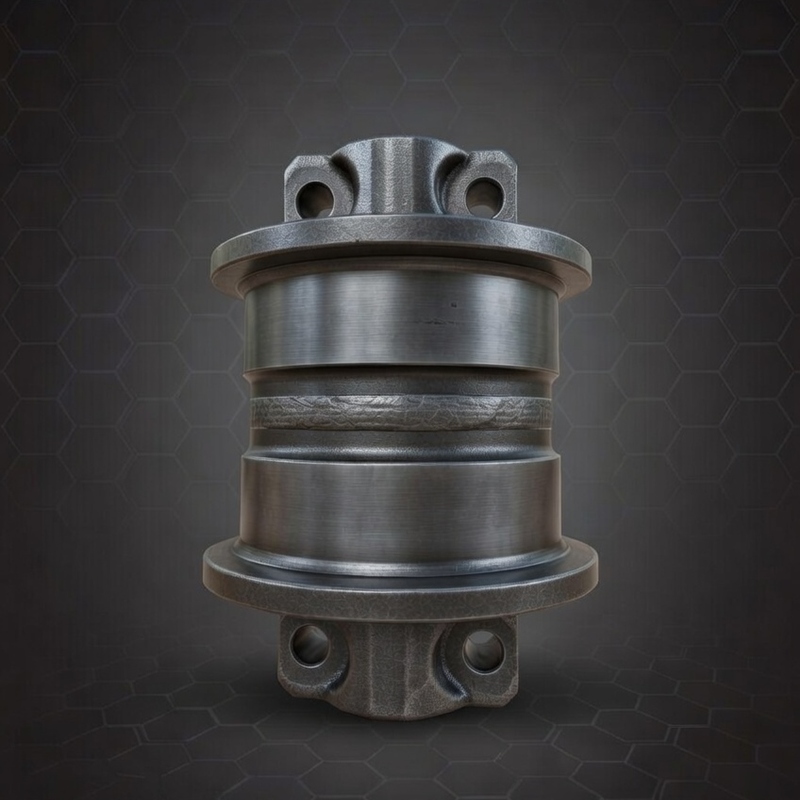
    Today, let’s do a quick analysis of track roller quality from two perspectives: the visible and the invisible. From the visible side, the most direct factors are the weight, the tread size, and the shaft diameter. Compared to rollers that are lightweight, undersized, or have thin shafts, those closer to the OEM weight and dimensions are much more likely to be of higher quality. From the invisible side, the quality of the floating seals, bushings, and O-rings—along with whether the roller body and shaft have undergone induction hardening or full quenching and tempering—will significantly determine the overall quality. In addition, the surface finish of the shaft, the raw material (40Mn2 vs. 50Mn), whether it’s forged from round bar or square steel, the grade of gear oil, and the machining process—all of these impact the final product. And naturally, these factors are reflected in the price. As I always say: there is no "best" process, only the one most suited for the application. Similarly, there is no right or wrong when it comes to price. There is no such thing as the "best" price—only the price that is right for you. Follow me for more professional insights into undercarriage parts.
  • Selecting Suitable Track Roller Materials and Designs Based on Excavator Operating Conditions
    Selecting Suitable Track Roller Materials and Designs Based on Excavator Operating Conditions Sep 01, 2024
    To choose the appropriate track roller materials and designs based on excavator operating conditions, it is essential to first consider the working environment and conditions of the excavator. The working environment typically includes various ground conditions, such as flat surfaces, uneven terrain, sandy soils, and mixed abrasive environments like ores. These conditions impose different requirements on the materials and designs of the track rollers. Material Selection: Wear Resistance: Excavators encounter various hard abrasive particles during operation, such as sand and ore, which can cause wear on the track rollers. Therefore, selecting materials with good wear resistance is crucial. For instance, high-hardness alloy materials or specially treated steels, such as carburized or quenched steels, can be considered. Impact Resistance: Excavators face various impacts during operation, such as those caused by uneven ground or falling objects. Thus, the materials for the track rollers need to possess excellent impact resistance. High-strength alloy steels or composite materials can be considered, as these materials can maintain structural integrity while withstanding impacts. Design Considerations: Structural Design: The structural design of the track rollers must take into account the working conditions of the excavator. For large excavators, which operate under more demanding conditions, the track rollers require a more robust structural design, such as reinforced wheel body structures and increased axle strength. Additionally, the welding structure of the track rollers should consider the impacts and alternating loads they will endure, employing more reliable welding methods and materials. Selecting suitable track roller materials and designs requires a comprehensive consideration of the excavator's working environment and conditions.

Address : Building 17, Block 9, Section D, 27th Road, Chenghui International Hardware and Electrical City, Xiamei Town, Nan'an City, Quanzhou, Fujian Province

Tel : +86 -18850110101

Email : info@kthpart.com

WhatsApp : +86 -18850110101

Wechat : Wechat

Subscribe

Please read on, stay posted, subscribe, and we welcome you to tell us what you think.

Submit
facebook twitter youtube

Copyright © 2026 Quanzhou Futeng Machinery Engineering Co.,Ltd All Rights Reserved. Sitemap | Blog | Xml | Privacy Policy Network Supported

Leave A Message

Leave A Message
If you are interested in our products and want to know more details,please leave a message here,we will reply you as soon as we can.
Submit

Home

Products

whatsApp

contact

Start a Conversation

Hi! Click one of our members below to chat on