< img height="1" width="1" style="display:none" src="https://www.facebook.com/tr?id=400502599665994&ev=PageView&noscript=1" /> Factory Price Bulldozer track chains,Bulldozer track chains Suppliers,Bulldozer track chains OEM
内页banner

Bulldozer track chains

Home

Bulldozer track chains

  • Bulldozer Track Chains: Lubricated vs Dry – Key Differences Explained
    Bulldozer Track Chains: Lubricated vs Dry – Key Differences Explained Jan 18, 2026
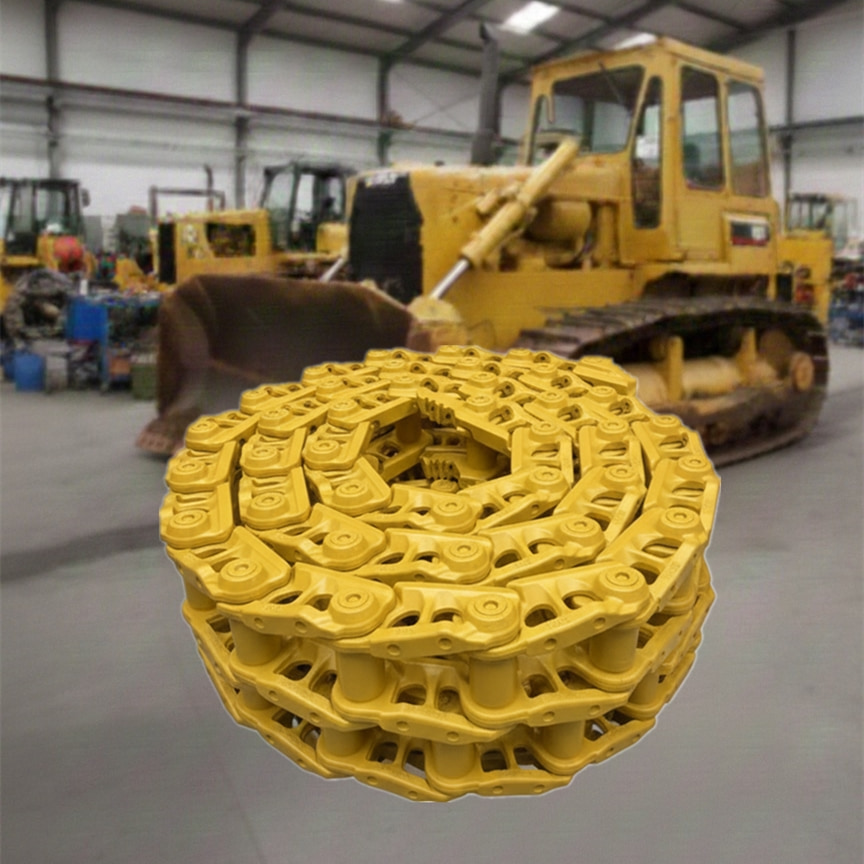
    The primary function of bulldozer track chains is to support and drive the track system, ensuring stable operation in complex terrains. Based on lubrication methods, track chains are categorized into lubricated (oil) chains and dry chains. Below, we analyze them step by step. First, you can easily distinguish between lubricated track chains (oil chains) and dry track chains by appearance: lubricated chains have a grease fitting (oil fill hole) on the track pin, while dry chains do not. Second, lubricated chains are typically equipped with master links, and although dry chains may also include master links for easier installation in some cases, this is not the primary difference between the two. Third, some high-end lubricated track chains incorporate PPR technology (Positive Pin Retention). In this design, a metal retaining ring is mechanically pressed into a specific groove between the track pin and the link, positively locking the pin in place and strictly controlling end-play (axial clearance) to the factory-specified value. This greatly enhances resistance to end-play growth, keeps the sealing surfaces in constant contact, maintains a stable oil film, and significantly extends the chain’s service life. For many large bulldozers, PPR-equipped lubricated track chains are strongly recommended or even standard, including: · Caterpillar: D8T, D9T, D10T, D11T · Komatsu: D275, D355, D375, D475 Here’s a clear comparison between lubricated track chains (oil chains / SALT) and dry track chains, focusing on structure, performance, maintenance, cost, and best applications. 1. Structure & Manufacturing Lubricated Track Chains: Sealed design with high-viscosity oil injected between pin and bushing, protected by O-rings or floating seals. Requires precise heat treatment (HRC 50-60), automated oil filling, and high-pressure sealing. More complex and ~5–10% heavier. Dry Track Chains: No oil or seals — pin and bushing in direct contact, hardened via carburizing/nitriding. Simpler forging/casting + surface treatment. Lower cost, lighter, shorter production time. 2. Performance & Lifespan Friction & Wear Lubricated: Low friction (0.05–0.1), 30–50% slower wear, excellent in mud/water/sand. Dry: Higher friction (0.2–0.4), faster elongation in abrasive/dry conditions. Noise & Vibration Lubricated: Smoother, quieter (70–80 dB). Dry: Noisier and more vibration (80–90 dB). Typical Lifespan Lubricated: 5,000–8,000 hours. Dry: 3,000–5,000 hours (depending on conditions). 3. Maintenance & Cost Lubricated: Check seals every ~500 hours; replenish oil or replace seals if leaking. Higher upfront cost (1.5–2× dry), but lower long-term cost due to longer life. Dry: Simple — clean dirt, inspect wear, no oil needed. Lower initial cost (20–30% cheaper to produce), but more frequent full replacements. Prone to rust in wet environments. 4. Best Use Cases Choose Lubricated Track Chains when: Harsh/wet/muddy conditions Mining, forestry, wetland work Heavy-duty machines (e.g., Cat D11, Komatsu D475) → Prioritize longevity and reduced downtime. Choose Dry Track Chains when: Dry, sandy, or flat terrain Budget-limited or short-term projects Smaller machines (e.g., John Deere 450) → Prioritize low cost and easy on-site repairs. Conclusion Lubricated bulldozer track chains excel in durability and harsh environments thanks to sealed oil lubrication, while dry track chains win on cost, simplicity, and light-duty applications. Select based on your soil type, workload, budget, and machine model — the right choice significantly improves efficiency and cuts overall operating costs. If you need model-specific recommendations, feel free to provide more details.  
  • Key Processes in the Production of Excavator and Bulldozer Track Links
    Key Processes in the Production of Excavator and Bulldozer Track Links Nov 12, 2024
    In the production process of excavator and bulldozer track links, various processes can ensure or enhance the quality of the chains. Here are some key processes: Material Selection: The use of high-quality steel is fundamental to ensuring track links. For example, 35MnBN material is used for the link plates of bulldozer track links and is treated through quenching and tempering to improve its core performance. Heat Treatment Process: Heat treatment is a critical step for increasing the hardness and wear resistance of the track links. For instance, the link plates undergo medium-frequency quenching to further enhance their wear resistance. Additionally, track links components typically undergo hardening and tempering to ensure proper mechanical properties.  Precision Machining Technology: Precision machining technology ensures that the dimensions and fit of each track links component are highly accurate, which improves overall durability and stability. For example, all bushings, pins, and forged link plates are processed with precision to ensure tight and accurate assembly dimensions and sealing performance. Lubrication Technology: Lubrication technology is also crucial in the production of track links. Lubricating the chains with oil reduces friction between the bushings and pins, allowing them to maintain superior wear resistance even in harsh working environments. Furthermore, regular lubrication can extend the lifespan of the chains. Flaw Detection Process: The flaw detection process for the track links of excavators and bulldozers is an important step in ensuring chain quality. Flaw detection is primarily performed using magnetic particle testing. This non-destructive testing method applies magnetization to the surface of the components, creating a leakage magnetic field in the defect areas, which attracts magnetic particles to form visible magnetic indications that reveal internal or surface defects in the parts, such as cracks or inclusions. Magnetic particle testing is a commonly used non-destructive testing method, where magnetization is applied to the surface of the parts followed by the application of magnetic particles. Observing the accumulation of particles at defect sites allows for the identification of cracks or other defects in the parts. This method can detect surface and near-surface defects, ensuring the safety and reliability of the equipment.   The role of magnetic particle testing is to ensure the quality and safety of the track links. Given the enormous loads that track links endure during use, even the smallest crack or defect can lead to severe mechanical failure or accidents. Therefore, magnetic particle testing can promptly detect and address these potential defects, extending the lifespan of the chains and ensuring the normal operation of the equipment as well as the safety of the operators.
  • Maximizing Undercarriage Life: The Power of 35MnB and Carburizing in Bulldozer Track Chains
    Maximizing Undercarriage Life: The Power of 35MnB and Carburizing in Bulldozer Track Chains Dec 27, 2025
    In the world of heavy construction, the undercarriage accounts for nearly 50% of machine maintenance costs. For bulldozer owners and fleet managers, choosing the right track chain isn't just a purchase—it’s a strategic investment in reducing downtime. At our manufacturing facility, we have perfected the formula for durability by combining premium 35MnB Boron Steel with an advanced Carburizing Process. Here is why this combination is the gold standard for bulldozer track chains. 1. Why 35MnB? The Steel of Choice for Heavy Duty Not all steel is created equal. 35MnB (Manganese Boron Steel) is a high-strength alloy specifically designed for components facing extreme stress. Superior Hardenability: The addition of Boron significantly increases the depth to which the steel can be hardened during heat treatment. High Tensile Strength: It provides the structural integrity needed to support the massive weight of a bulldozer without deforming. Impact Resistance: Unlike standard carbon steel, 35MnB maintains its toughness even in freezing environments or rocky terrains. 2. The Science of Strength: Our Carburizing Process To withstand the constant grinding of sand, rock, and mud, a track chain needs a "hard shell" and a "tough core." This is achieved through our specialized Carburizing Heat Treatment. Surface Hardness (The Shell): By diffusing carbon into the surface of the 35MnB steel at high temperatures, we create a high-carbon martensitic layer. This results in a surface that is incredibly resistant to abrasive wear. Core Ductility (The Heart): While the surface is hard, the interior of the chain link remains ductile. This "soft" core allows the chain to absorb heavy shock loads and impacts without cracking or snapping—a common failure in cheaper, induction-hardened chains. Deep Case Depth: We ensure a precise effective case depth (typically 2mm-5mm depending on the model), ensuring the chain remains operational even after significant surface wear. 3. The "Chain Reaction" of Benefits Using our 35MnB carburized track chains leads to a series of advantages for your equipment: Extended Service Life: Expect a significant increase in hours compared to standard dry or non-carburized chains. Reduced Friction: Our smooth, hardened surfaces reduce the wear rate on matching components like track rollers and sprockets. Lower Cost Per Hour: Longer intervals between replacements mean more time on the job site and less money spent in the workshop. 4. Quality You Can Trust Every link we produce undergoes rigorous quality control, from material spectroscopic analysis to ultrasonic flaw detection and hardness testing (HRC). Whether you are operating a CAT D6, D8, or larger mining dozers, our chains are engineered to meet or exceed OEM specifications.
  • Why do we value the carburizing process for bulldozer track chains?
    Why do we value the carburizing process for bulldozer track chains? Dec 03, 2024
    The specific impacts of carburizing treatment on the performance of bulldozer track chains are reflected in the following aspects: Improved Hardness and Wear Resistance: Carburizing treatment significantly increases the hardness and wear resistance of the chain by increasing the carbon concentration on the surface. For example, in chains used for slagging machines, the enhanced surface hardness allows them to withstand significant tension and pressure, extending their service life. Enhanced Fatigue Strength and Crack Resistance: Carburizing treatment forms fine, evenly distributed carbides, avoiding network-like or large clumping of carbides, thus improving fatigue strength and preventing issues such as cracking and flaking. Additionally, rare-earth carburizing processes can create a more gradual gradient in carbon concentration, further enhancing fatigue resistance and wear performance. Improved Adhesion and Coating Performance: For components like the transmission shafts of bulldozers, using ion plating and magnetron sputtering composite techniques during carburizing treatment allows for the deposition of NbTaZrC gradient coatings, increasing the adhesion between the coating and the substrate, improving wear resistance, and extending service life. Reduced Wear and Increased Longevity: Although carburizing treatment can significantly enhance the hardness and wear resistance of the chain, regular lubrication and maintenance are still necessary in actual use to reduce wear and friction. Through the increase in hardness, improvement in fatigue strength, enhancement of adhesion, and reduction of wear, carburizing treatment significantly enhances the overall performance and service life of bulldozer track chains.
  • Dry vs. Lubricated: Choosing the Right Excavator Track Chains and Bulldozer Track Chains
    Dry vs. Lubricated: Choosing the Right Excavator Track Chains and Bulldozer Track Chains Feb 02, 2026
    1. Travel Frequency vs. Static Work Dynamics The fundamental difference lies in how these machines move. Bulldozer track chains are designed for high-frequency travel. Constant movement creates immense traction and friction between the track bush and track pin. In this scenario, lubricated track chains are essential; their internal oil film significantly reduces heat buildup, preventing track link elongation and deformation. In contrast, an excavator spends roughly 90% of its operational time stationary. Because excavator track chains experience far less internal friction during a standard shift, the higher price tag of lubricated chains—despite their longer theoretical lifespan—offers a poor return on investment (ROI) for most digging applications. 2. The Impact of Hydraulic Breakers: High-Frequency Vibration Mid-to-large machines (over 20 tons) are frequently equipped with hydraulic breakers for rock crushing or road demolition. This creates intense, high-frequency vibrations that travel through the undercarriage. For lubricated track chains, these vibrations are a "silent killer," often causing the precision rubber seals to shift or fail, leading to critical oil leaks. Furthermore, master pin bolts are more prone to snapping under such vibration. Dry excavator track chains, featuring a simpler and more rugged construction, offer superior mechanical toughness and durability for these heavy-duty "breaking" tasks compared to delicate "oil chains." 3. Lateral Stress and Sealing Risks Excavators often operate on uneven terrain, generating massive lateral (side) thrust. Lubricated track chains rely entirely on their seals to retain oil. Lateral loads can cause slight pin deflection, squeezing the seals and allowing oil to escape. Once a seal fails, external grit and sand enter the link, mixing with residual oil to create an "abrasive paste." This accelerates wear much faster than standard metal-on-metal friction. Dry excavator track chains possess a "self-cleaning" property, making them far more reliable in the harsh, muddy, and watery environments typical of excavation sites. 4. Cost-Efficiency for Compact Excavators The cost of lubricated chains is typically 30% higher than dry chains. For compact excavators (under 10 tons), the lighter machine weight exerts minimal crushing stress on the pins. Consequently, the lifespan of dry excavator track chains is more than sufficient for the machine's duty cycle. Even though mini-excavators travel more frequently and rarely use breakers, lubricated chains remain an unnecessary expense for this category. Core Comparison Table: Dry Type vs. Lubricated Type Comparison Factor Dry Track Chains (Standard) Lubricated Track Chains (SALT) Best Fit Excavator track chains (All Sizes) Bulldozer track chains / Loaders Operational Logic High impact, heavy digging, breaking Continuous travel, long-distance pushing Vibration Resistance Excellent; simple and rugged structure Lower; seals prone to vibration damage Internal Wear Higher (Metal-on-metal friction) Extremely Low (Oil film protection) Total Cost Economical; lower replacement costs High; requires regular seal monitoring
  • The Impact of Heat Treatment Processes on Bulldozer Track Chains
    The Impact of Heat Treatment Processes on Bulldozer Track Chains Jul 07, 2024
    The heat treatment process of bulldozer track chains significantly enhances their performance in the following aspects: 1. Increased Hardness and Wear Resistance: Heat treatments, such as quenching and tempering, can markedly improve the hardness of chain materials. For example, the composite secondary chemical heat treatment method effectively increases the surface hardness and the thickness of the hard layer on the pin shaft, thereby enhancing the chain's wear resistance and durability. 2. Improved Mechanical Properties: Heat treatment processes adjust the microstructure of the material, improving its mechanical properties. By optimizing the heat treatment process of 40Cr steel, the treated mechanical properties can meet or exceed those of the original manufacturing material, 42CrMo steel, fulfilling the operational requirements of the chain. 3. Extended Service Life: Proper heat treatment enhances the fatigue strength and tensile strength of the chain, extending its service life. For instance, applying the quenching-tempering process to drive chain plates and drive chain pins not only increases core hardness and tensile load limits but also significantly saves energy and reduces consumption. 4. Reduced Maintenance Costs: By improving the wear resistance and fatigue resistance of the chain, the frequency of maintenance and replacements due to wear or damage is reduced, thereby lowering long-term operational costs. 5. Adaptability to Different Working Environments: Various heat treatment processes can be optimized according to the working environment and load conditions of the chain, ensuring it maintains good performance under different conditions. For example, medium-frequency induction heat treatment technology can be used for large-diameter chains and various sprockets. By improving tooling structures and heat treatment process parameters, more precise heat treatment effects can be achieved. In summary, the heat treatment process of bulldozer track chains is a key technology for enhancing their performance. Through appropriate heat treatment, the durability, reliability, and cost-effectiveness of chains can be significantly improved.   Reference link:https://onlinelibrary.wiley.com/doi/10.1002/mawe.201700061  

Address : Building 17, Block 9, Section D, 27th Road, Chenghui International Hardware and Electrical City, Xiamei Town, Nan'an City, Quanzhou, Fujian Province

Tel : +86 -18850110101

Email : info@kthpart.com

WhatsApp : +86 -18850110101

Wechat : Wechat

Subscribe

Please read on, stay posted, subscribe, and we welcome you to tell us what you think.

Submit

Copyright © 2026 Quanzhou Futeng Machinery Engineering Co.,Ltd All Rights Reserved. Sitemap | Blog | Xml | Privacy Policy Network Supported

Leave A Message

Leave A Message
If you are interested in our products and want to know more details,please leave a message here,we will reply you as soon as we can.
Submit

Home

Products

whatsApp

contact

Need Help? Chat with us

Start a Conversation

Hi! Click one of our members below to chat on